
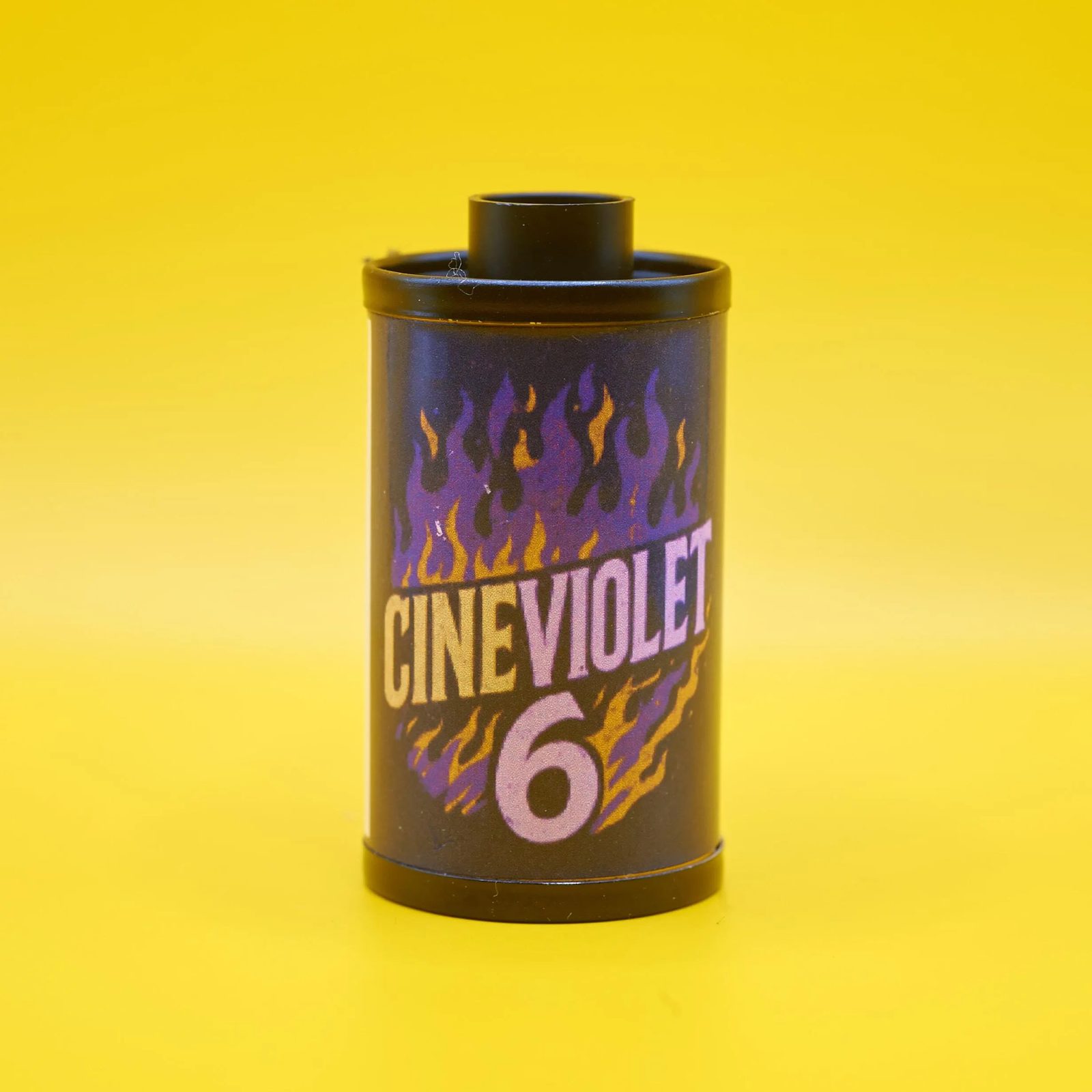
Most experimental films break one rule. Cineviolet 6 breaks two — on purpose — and the result glows like a streetlight seen through tears.
💜 What it actually is
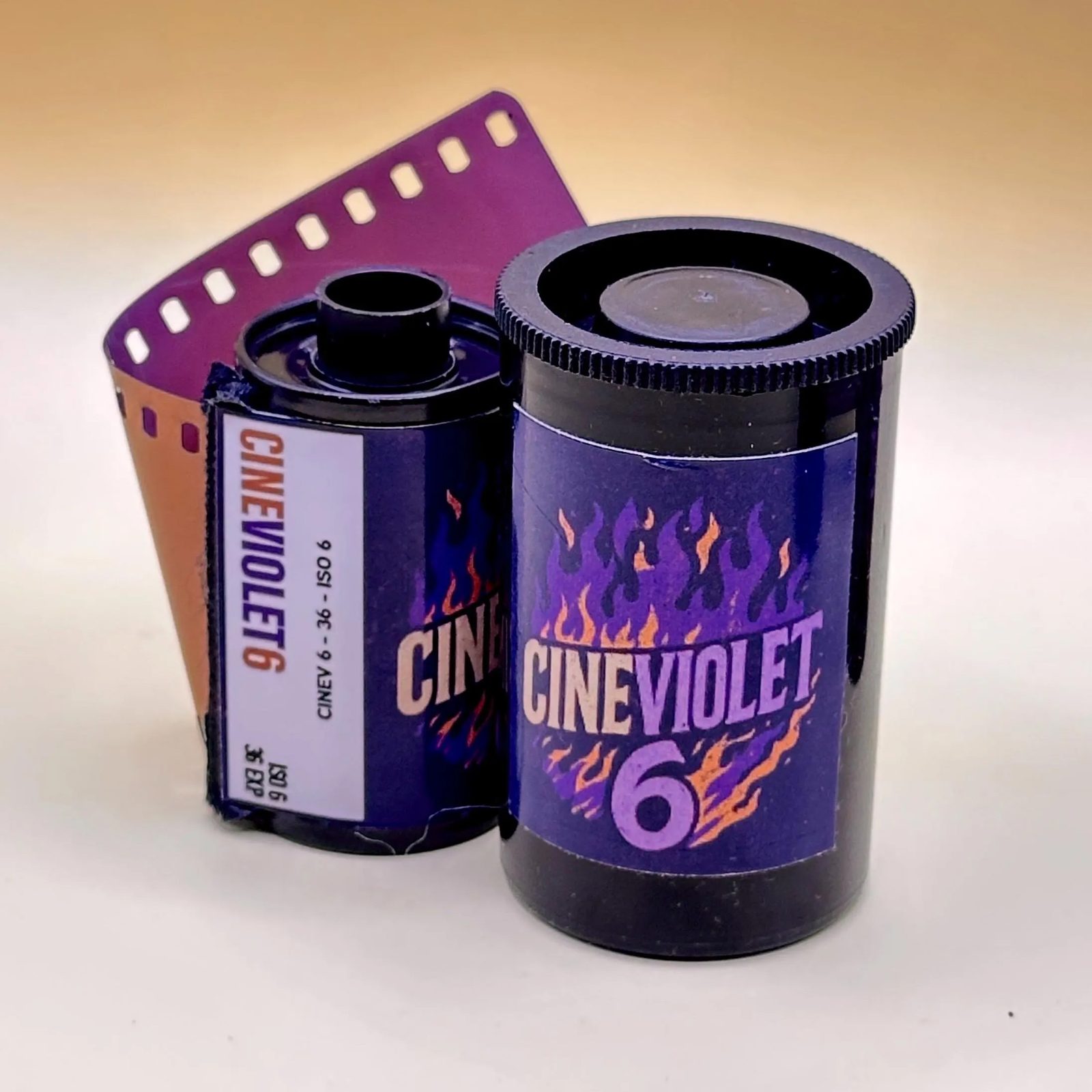
Underneath the name, Cineviolet 6 is Kodak Vision 500T — stock 5279, the tungsten cinema negative. We did two things to it that you're not supposed to do at the same time:
- Sponged off the remjet — the black anti-halation backing cinema film normally hides behind. Without it, bright points of light bloom and halate instead of staying crisp.
- Redscaled it — loaded the film backwards, so light hits the base before the emulsion and the color runs in reverse, violet-first.
Do both to the same roll and the highlights don't just blow out — they scorch violet and rose around every bright edge. Lavender mid-tones, inky blacks, an otherworldly palette that celebrates its own flaws.
🎞️ The look
- Haunted violet sunsets and mythic, grit-laced portraits.
- Tiny flecks of residual remjet cling to the edges and perf holes — organic noise that reads as micro-stars and texture.
- A remjet-free base, so it's compatible with most C-41 labs by default.
📸 How to shoot it
- Meter for mid-tones: EI 6–12 for deep violets, EI 25–50 for balanced purples.
- Push a stop (EI 12) for heavier grain and deeper shadows; pull (EI 50) for softer tones.
- Backlit scenes flare hardest; diffused light yields a pastel-purple dream.
🧪 Developing Cineviolet 6
ECN-2 for full cinematic latitude, or C-41 for a punchier, contrastier take — the remjet's already gone, so most labs will run it without a surcharge.
🛒 A small-batch experiment that keeps selling out
Cineviolet 6 is made in tiny runs, by hand, and it sells through fast — there's genuinely nothing else quite like it. It's between batches right now, but the next spooling is coming. Get on the list and you'll know the moment it's back.
Shot a roll before it sold out? Send me your frames — I love seeing where this one ends up.